Build a smarter GTM engine.

We combine GTM strategy, AI automation, and systems design to help any go-to-market team create more efficient and scalable revenue operations.

Start with a GTM Diagnostic

Built from nothing

465

meetings booked

$32M

pipeline generated

18 months

from a standing start

An outbound program built end to end — targeting, sequences, hiring, coaching, and the number. Read the case study.

What changes when the structure is in place: more pipeline · less manual work · better gtm intelligence · faster execution · clearer priorities · more scalable processes.

Experience: ZoomInfo · Forrester · RSA Security

Services

From insight to impact.

We diagnose what is holding growth back, build the systems to fix it, automate the work that slows teams down, and provide the leadership to keep everything moving.

Expansion paths

Inputs

CRMSales dataEmail dataTech stackProcessPipeline

AI + human analysis

Signal extractionBenchmarkingRoot-cause review

Output

Prioritized roadmap

No data yet?

TAM buildSegment testsMessage testsLive reply data

Diagnose

A deep review of your go-to-market motion to identify what is working, what is broken, and what to fix first.

What's included

  • GTM audit
  • Email response analysis
  • Sales process review
  • Tech stack review
  • Pipeline analysis
  • Bottleneck identification
  • Data & CRM health
  • Prioritized action plan
  • Email deliverability audit

Outcome

A clear, data-backed roadmap showing where to focus, what to fix, and what will have the biggest impact.

Also in Diagnose

Campaign & TAM Testing

For teams without enough history to audit, or entering a new market. We build your total addressable market, split it into testable segments, and run controlled campaigns against each one — so you pick a segment based on live reply data instead of a hypothesis. Fixed length, and it ends with a decision, not a standing pipeline number.

  • TAM Build

    Sizing and list construction for every segment worth testing.

  • Segment Testing

    Controlled campaigns per segment on isolated sending infrastructure, so tests don't burn your primary domain.

  • Message Testing

    Multiple angles per segment, measured on reply rate and reply quality, not opens.

  • Read-Out

    Segment-level results and a recommendation on which segment and message to scale.

Outcome

A validated segment and message, proven with live response data, before you spend a quarter building the motion around a guess.

Who this is for

Same system, four different symptoms

The problem usually looks different depending on where you sit. It is almost always the same problem.

Founders

The motion still lives in your head

You are the best seller in the company and it does not transfer. Nobody else can run the motion without you in the room, and every new hire relearns it from scratch.

Sales leaders

Activity is up and pipeline is flat

Reps are working. Nobody is reviewing calls, nobody can say which part of the motion is failing, and by the time it shows in the number it is a quarter old.

Operations and RevOps

The CRM decays faster than you can clean it

Duplicates, stale records, half-finished automations. Every cleanup is a one-off that comes undone, and leadership decides on data nobody trusts.

Marketing

Leads go over the wall and disappear

Sales and marketing disagree on what qualified means, routing is manual, and no one can trace which campaigns produced revenue.

In every case the company is spending on people and tools that cannot compound, because there is no system underneath them.

Sound familiar?

Most GTM teams aren't short on tools. They're short on structure.

It usually isn't effort, technology, or outbound "not working." It's that teams invest in people, tools, and programs before the foundation those investments need is in place.

The symptoms are familiar

  • No clear GTM structure or operating rhythm
  • Reps aren't aligned on the process or what “good” looks like
  • Everyone is prospecting differently and winging their own approach
  • No repeatable frameworks for targeting, messaging, or execution
  • Training happens once, then gets forgotten
  • Too much manual work takes time away from selling
  • Disconnected tools and data create more work instead of less
  • Pipeline generation is lower than leadership expected
  • Teams invest in AI without a clear strategy for how it fits into the business
  • No consistent process for measuring, learning, and improving

So the company hires, buys tools, and adds automation. Six months later the questions start:

"Why isn't this investment paying off?"

"Why doesn't outbound work?"

Outbound usually wasn't the problem. The foundation was.

Build the foundation before making the investment.

How it works

Three steps, no mystery

Simple to start, easy to stop. You'll know what you're getting before anything is signed.

01

Assess

We identify the highest-impact problems and opportunities across your GTM motion.

02

Build

We design and implement the systems, workflows, and automation that fix them.

03

Optimize

We continuously improve performance and scale what's already working.

What you keep

What you keep when the work is done

The usual way

  • The playbook stays with the agency
  • Tools are bought in the agency's name
  • You need them again next quarter for the same work
  • Documentation arrives at the end, if at all
  • The people who sold it are not the people who build it

How we work

  • The playbook is documented as it is built, in your workspace
  • Every tool is in your name and on your card
  • The program runs without us by design
  • Two working sessions and thirty days of questions at handover
  • The person who sells it builds it and hands it over

If we have done the job properly, you should be able to stop working with us and keep everything running.

About me

Why I started TierneyLabs

I've spent nearly a decade in B2B sales and GTM at ZoomInfo, Forrester, and RSA Security, as an individual contributor and a leader.

I've carried a number as an AE, managed large strategic accounts, and built an outbound program from nothing — 465 meetings and $32 million in pipeline over eighteen months. I built the targeting, wrote the sequences, hired and coached the reps, and owned the number. Read that case study.

I've sat in every seat in the motion, so I know what a working GTM program looks like — and how fast one comes apart without structure underneath it.

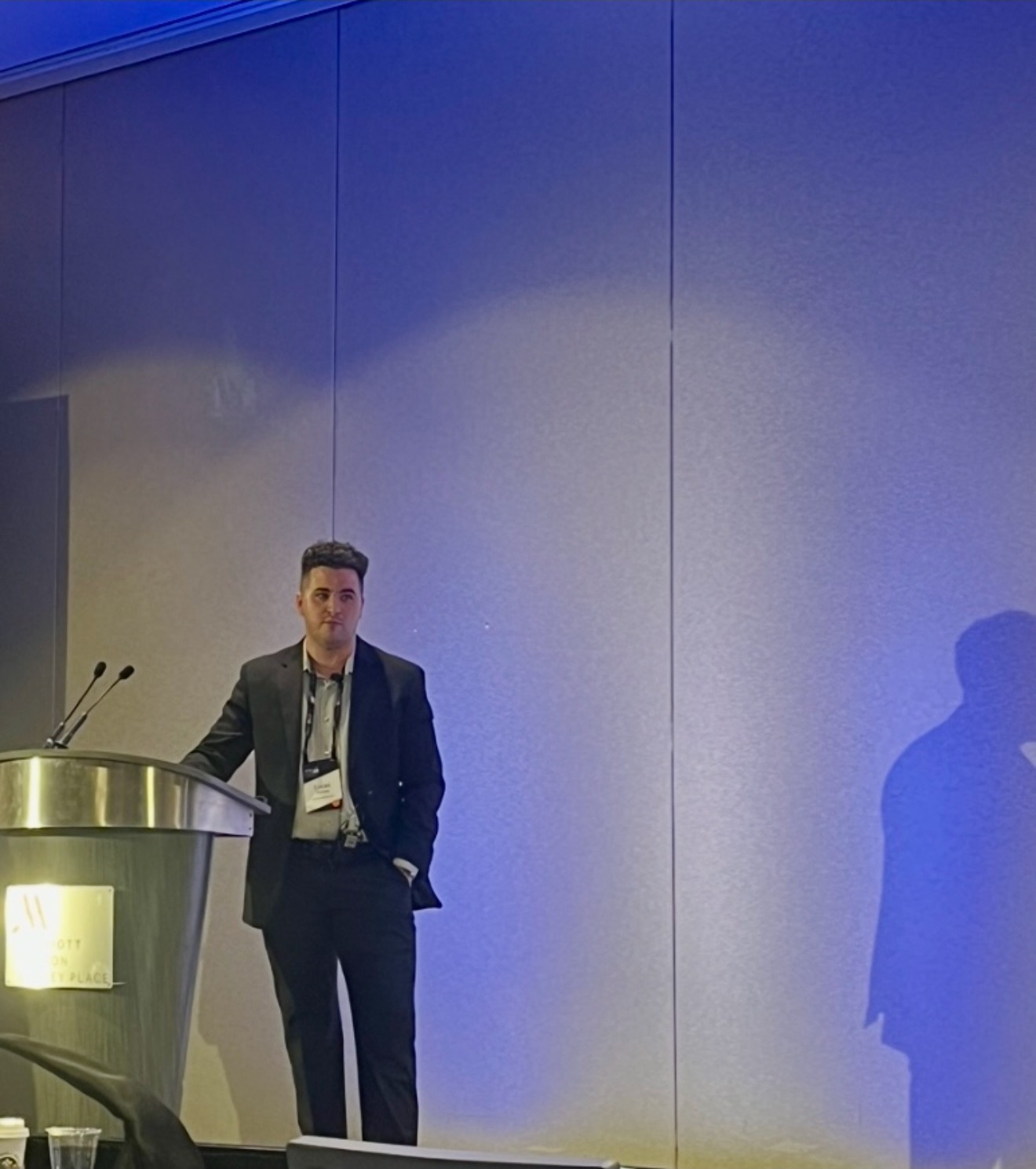
Lucas Tierney speaking at a GTM conference

“There isn't really a process. Everyone does things their own way.”

“We got trained once, and there was no reinforcement after that.”

I've heard versions of this at every size of company. The teams that struggle usually aren't short on talent or tooling. They're short on the structure that lets those investments compound.

A modern GTM program needs an operating system.

Whether you're starting outbound, rebuilding it, auditing what's already running, or working on something else entirely, the same foundation has to be in place:

Clear strategy

Who are we targeting, why, and where can we win?

Repeatable processes

What should reps actually do, and how should they do it?

Operating rhythm

How does the team plan, execute, inspect, learn, and improve?

Frameworks and accountability

What does good look like, and how do we consistently reinforce it?

Efficient systems

What can be automated so your team spends more time selling and less time on administrative work?

Intelligence and optimization

How do data and AI help the program continuously get smarter?

Where I work

Outbound is where I go deepest — building a program from scratch, rebuilding one that stalled, or auditing one that's running. I also work on inbound routing, sales and marketing alignment on qualified leads, AE/BDR handoffs, the RevOps reporting layer, and interim GTM leadership between hires.

How I work

I bring frameworks proven at enterprise scale and rebuild them around your ICP, your product, and your sales cycle. Nothing off the shelf — the framework is the starting point; what you end up with is specific to your company.

That's why I built TierneyLabs.

I help build the foundation for modern GTM programs — diagnosing what's broken, building repeatable processes, and implementing AI and automation that removes manual work. The goal is a GTM system where:

  • Your team knows exactly what they're doing
  • Your process is repeatable and measurable
  • Your tools work together instead of creating more work
  • Reps spend more time selling
  • Leadership has visibility into what's working
  • AI and automation improve efficiency instead of adding complexity
  • Your investments have the structure required to produce real ROI

Because in the next era of GTM, talented people and expensive tools alone won't be enough. The teams that win will be the ones with the strongest foundations, the clearest operating systems, and the ability to continuously improve.

Let's build the structure that turns your GTM investment into a scalable, repeatable growth engine.

Common questions

Who is this for?
  • You're starting outbound from scratch and need the program built, not advice about it
  • You're a founder still running outbound personally and want to hand it to a team
  • You just raised, and building the function is a board-level expectation this quarter

You have reps, but no program behind them.

  • SDRs or BDRs in seat with no manager above them
  • Outbound running, results flat, and no clear read on why
  • AEs you need doing outbound who won't do it consistently without a system

You have a stack, but no system.

  • A RevOps team of one holding together tooling that six different people bought

If you have a working program and a leader running it, you don't need us. We're most useful when the motion has to exist and doesn't yet — or exists and isn't working.

How fast can we start?

Usually within a week or two of the first call. Audits and playbook builds move fastest; fractional work starts on the next cycle.

Do you replace my reps?

No. We build the program your reps run, coach them against it, and automate the work that shouldn't be manual.

What does it cost?

Scope varies by engagement. Book a call and we'll tell you before any work starts.

Why can't I just use AI?

One model is one opinion. We run Claude, ChatGPT, Gemini, Grok, and Perplexity into one platform specifically because a single model can't tell you when it's wrong. Where they agree, we move. Where they disagree, a human looks. If you're working from one model, you have no disagreement signal at all — you just have confidence.

Sales is still human. AI compresses the research, the enrichment, the list-building, the drafting. People sniff out AI slop. It doesn't read a room, know which VP has political cover to buy this quarter, or decide what to do when the plan stops working in week six. Judgment and accountability don't automate, and someone has to own the number.

The teams that get the most out of AI aren't the ones with the best prompts. They're the ones who already knew what good looked like.

Book a call

Ready to fix your GTM system?

Let's identify what's slowing growth down and build a smarter way forward. Thirty minutes, no pitch deck — grab a slot, or send a note instead.

Not ready for a call?

Send a message

Get the GTM structure checklist

The ten things that have to be in place before hiring reps or buying more tooling. One page, no follow-up sequence.